







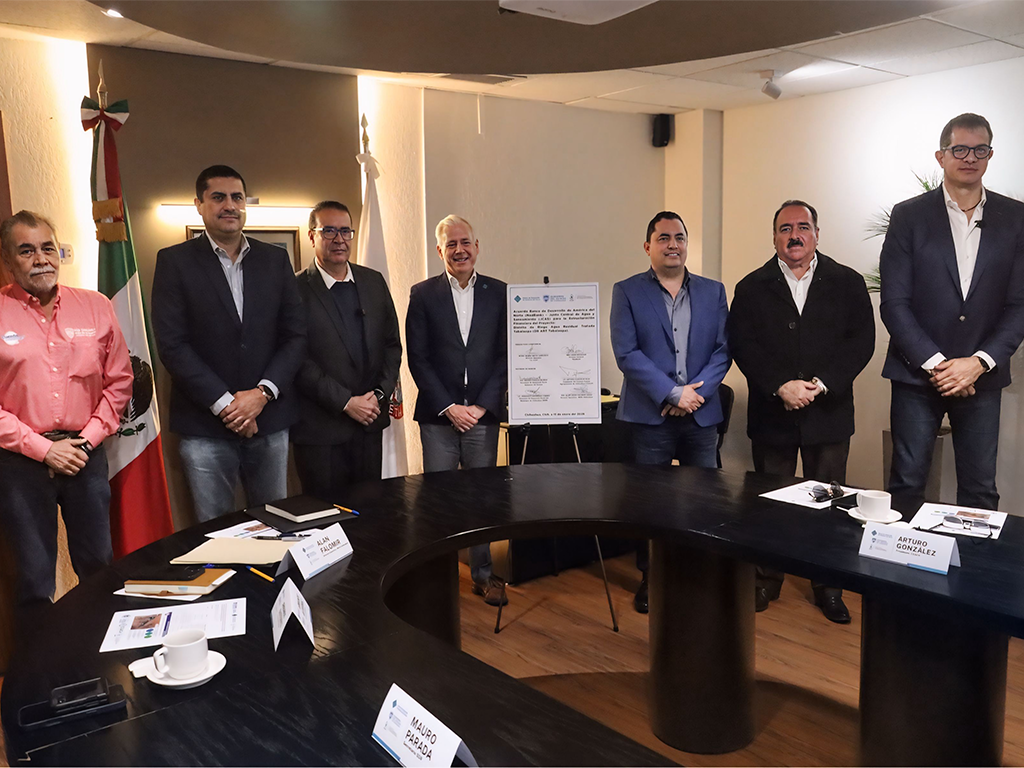
As part of a strategy to strengthen water security and agricultural development in the state, a Coordination Meeting and Agreement Signing was held between the North American Development Bank (NADBank) and the Central Water and Sanitation Board of Chihuahua (JCAS), marking a key step in the financial structuring of the Tabaloapa–Aldama Reclaimed Wastewater Irrigation District and Regenerative Irrigation Project.
During the meeting, an executive presentation of the project was delivered, outlining its scope, benefits, and long-term vision. The initiative seeks to responsibly leverage treated wastewater to boost agricultural productivity, regenerate soils, and contribute to the recovery of water resources, particularly through actions aimed at aquifer restoration. All of this is framed within an approach based on sustainability, resilience, and compliance with applicable regulations.
The project is positioned as a comprehensive model that goes beyond hydraulic infrastructure, offering an innovative solution to the region’s water challenges. Its approach integrates the participation of public institutions, financial organizations, and technical sector stakeholders, with the goal of transforming a structural challenge into an opportunity for productive development, ensuring the human right to water and strengthening water and climate resilience in Chihuahua.
The meeting included the participation of key authorities and sector representatives, among them Mtro. Mario Mata Carrasco, Executive Director of JCAS; MBA John Beckham, Managing Director of NADBank; Eng. Alan Jesús Falomir Sáenz, Executive Director of JMAS Chihuahua; Eng. Armando Gutiérrez, Director of Rural Development for the Municipality of Chihuahua; as well as Arturo González, President of the State Agricultural Council of Chihuahua (CEACH), in addition to various institutional representatives.
Authorities agreed on the importance of initiatives like this to advance toward more efficient and sustainable water management, highlighting the value of interinstitutional collaboration in delivering high-impact strategic projects.
Finally, the openness to technical dialogue and the willingness of the participating organizations were acknowledged—key elements that will enable continued progress on this project, considered essential for the state’s water, agricultural, and environmental future.
See post: https://www.facebook.com/share/p/1Tu253fuqy/
